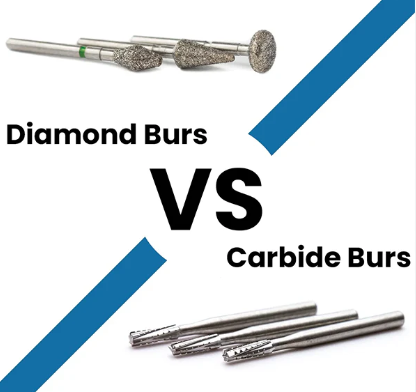
When it comes to modern dentistry, the rotary instrument is one of the most important tools in every dental practice. Among them, dental burs play a crucial role in cavity preparation, tooth cutting, and restorative procedures. Two of the most widely used burs are diamond burs and carbide burs. While they may look similar at first glance, their materials, cutting mechanisms, clinical applications, and costs are significantly different.
If you are a dentist trying to decide which bur to use, or a dental student eager to understand the difference, this guide will help you compare diamond burs vs. carbide burs in detail.
What Are Diamond Burs?
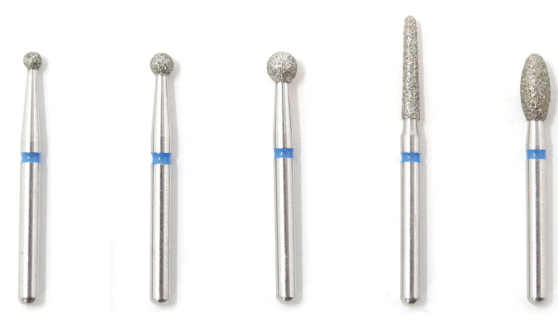
Diamond burs are rotary instruments with a stainless-steel shank coated with fine particles of natural or synthetic diamond. These particles are bonded to the bur head using electroplating (usually nickel). The bur works through an abrasive grinding mechanism rather than cutting.
Key Features of Diamond Burs:
Abrasive action for grinding and shaping hard surfaces.
Available in different grit sizes (super-coarse, coarse, medium, fine, ultra-fine).
Ideal for preparing enamel, porcelain, and ceramic restorations.
In dentistry, diamond burs are highly valued for procedures requiring precision and smooth finishing, especially in cosmetic and restorative cases.
What Are Carbide Burs?
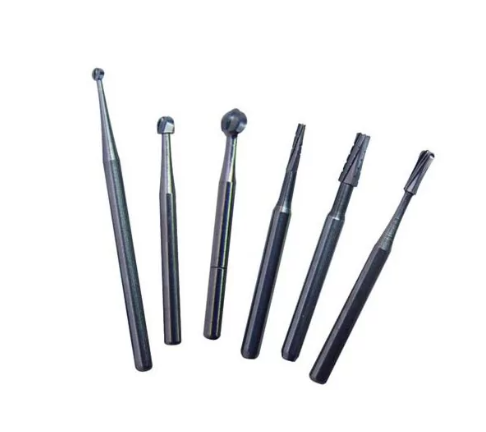
Carbide burs are made from tungsten carbide, a very hard alloy of tungsten and carbon, often bound with cobalt. Unlike diamond burs, carbide burs rely on a cutting action similar to a sharp blade. The flutes (cutting edges) on the bur head slice through the tooth or restorative material, leaving a smooth finish.
Key Features of Carbide Burs:
Strong cutting ability, especially for dentin and metals.
Efficient removal of carious tissue and old restorations.
Produce less vibration compared to diamond burs.
Carbide burs are particularly effective for cavity preparation, crown sectioning, and cutting through amalgam or composite restorations.
Diamond Burs vs. Carbide Burs: The Main Differences
To understand which bur to choose, let’s break down the major differences between diamond and carbide burs:
1. Material and Structure
Diamond Burs: Stainless steel body with diamond grit coating.
Carbide Burs: Solid tungsten carbide with sharp flutes.
2. Cutting Mechanism
Diamond Burs: Abrasive grinding with diamond particles.
Carbide Burs: Sharp cutting with fluted blades.
3. Surface Finish
Diamond Burs: Leaves a slightly rough surface, useful for bonding.
Carbide Burs: Produces a smoother surface, ideal for cavity walls.
4. Best for Materials
Diamond Burs: Enamel, ceramics, porcelain, zirconia.
Carbide Burs: Dentin, amalgam, composite, metal alloys.
5. Durability
Diamond Burs: Diamond particles wear off with use.
Carbide Burs: Cutting edges can dull or break but usually last longer.
6. Patient Comfort
Diamond Burs: More vibration and noise due to abrasive action.
Carbide Burs: Smoother, less vibration, more comfortable for patients.
Clinical Applications of Diamond Burs
Dentists typically select diamond burs in the following cases:
Crown and Veneer Preparation
Diamond burs are perfect for cutting through enamel and creating smooth margins for ceramic restorations.
Shaping Hard Restorative Materials
Effective for trimming porcelain, zirconia, and glass-ceramic restorations.
Cosmetic Dentistry
Fine-grit diamond burs provide excellent finishing for aesthetic procedures like veneers.
Orthodontic Bond Removal
Diamond burs help in polishing tooth surfaces after bracket debonding.
Clinical Applications of Carbide Burs
Carbide burs are chosen when precise cutting and efficient removal of tissue or restorative material are required:
Cavity Preparation
Smoothly cuts dentin and leaves clean cavity walls.
Amalgam and Composite Removal
Carbide burs efficiently cut through metal and resin restorations.
Crown and Bridge Sectioning
Used to cut metal crowns and bridges during removal.
Endodontic Access
Effective in accessing pulp chambers and cutting through tooth structure.
Cost Comparison
Diamond Burs: Generally cheaper per unit but wear out faster. Often considered semi-disposable.
Carbide Burs: More expensive upfront but more durable, especially for cutting metals and composites.
From a cost-effectiveness perspective, many dentists keep both types in stock and select according to the procedure.
Diamond Burs vs. Carbide Burs: Which Should You Choose?
The answer depends on the clinical situation:
Choose Diamond Burs if:
You are preparing crowns, veneers, or aesthetic restorations.
You need to cut hard surfaces like enamel, porcelain, or zirconia.
You want a rough surface for better bonding.
Choose Carbide Burs if:
You are removing old restorations (amalgam or composite).
You need a smooth finish inside a cavity.
You are cutting metal crowns, bridges, or working with dentin.
Expert Recommendation
Most dentists use a combination of diamond and carbide burs in daily practice. For example, a crown preparation may begin with a diamond bur to reduce enamel and shape the tooth, followed by a carbide bur to smooth internal walls.
Therefore, instead of choosing one over the other, the real solution is to understand the strengths of each type and apply them where they perform best.
Conclusion
Both diamond burs and carbide burs are essential instruments in dentistry. Diamond burs excel in cutting hard materials and providing precision in aesthetic work, while carbide burs are unmatched in cutting dentin, metal, and restorative materials with smooth efficiency.
The best choice is not “either-or” but “when and how” to use them. By keeping both in your dental toolkit, you can maximize efficiency, improve patient comfort, and achieve superior clinical outcomes.
If you want to buy cost-effective diamond bur from China. Feel free to contact CENTURYDENT.